Okay, so check this out—
I tried a newer browser wallet the other day.
My instinct said it would be clunky but pleasantly surprising.
Initially I thought it was yet another extension that overpromises on UX and underdelivers on security, but then I dug deeper and found design choices that felt actually thoughtful and pragmatic for day-to-day DeFi use.
This led me to test it across multiple chains and use cases.
Whoa, seriously surprising move.
I started by importing an account from Metamask on Chrome.
The onboarding was focused and gave me clear control over permissions.
On one hand the permission prompts were granular enough to prevent accidental approvals, though actually there were moments where I wanted even more context about RPC endpoints and where data was flowing.
Something felt off about the gas estimator at first but then it calibrated.
Hmm, not bad overall.
I tried swaps, NFT buys, and some contract interactions on testnets.
Transactions were fast and the UI surfaced nonce and gas options simply.
My instinct said this would be superficial polish over a shaky backend, yet digging into logs and network calls showed consistent RPC fallback handling and sensible retry logic, which matters when nodes hiccup during peak usage.
I liked the multi-chain flow and the clear chain switcher.
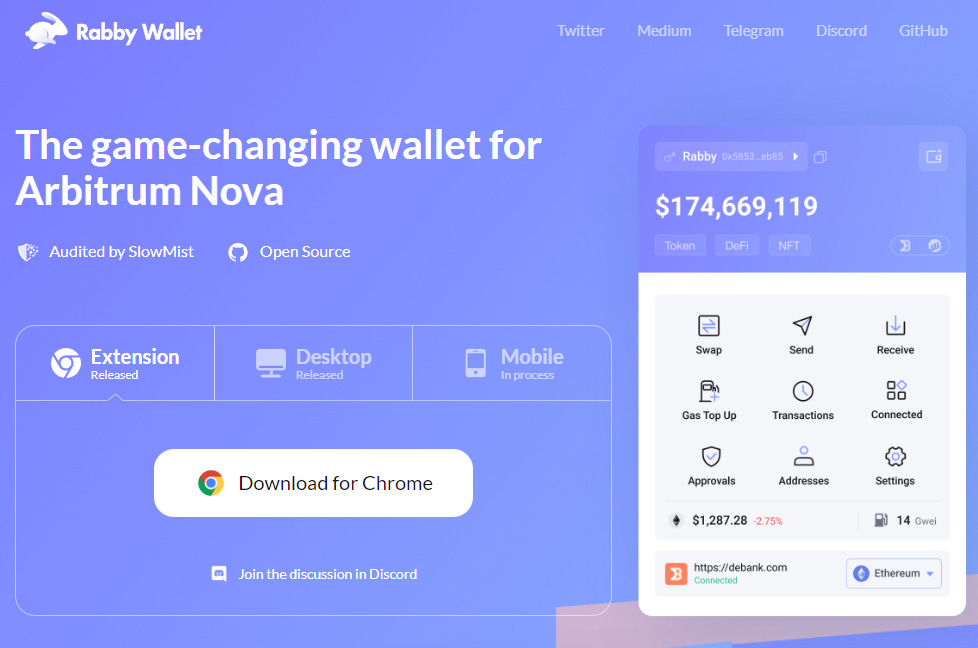
Really neat feature set.
It surfaces approval limits and lets you batch transactions well.
Those are small features but they change the way you manage recurring approvals.
Okay, so check this out—there’s an approach to wallet connectivity where the extension isolates dapp sessions and restricts cross-site data sharing, and that reduces attack surface significantly while keeping the UX tolerable for power users.
I’ll be honest, I kept toggling it off and on to see how it affected behavior; actually, wait—let me rephrase that.
Where to try it
If you want to see what I mean, download and test rabby wallet and poke around the permission screens and batch tx flows.
Here’s the thing.
Security isn’t only about locking keys behind a password or hardware module.
Rabby’s approach blends local signing with optional hardware support.
Initially I thought hardware-only integration would be the only safe approach, but then I realized that for day-to-day DeFi moves a pragmatic hybrid model reduces friction without sacrificing key safeguards, especially when paired with account abstraction features.
The UI nudges you to separate hot and cold accounts which is practical and very very important.
I’m biased, sure.
I like wallets that assume users will make mistakes.
There are safety nets like tx previews, revoke tools, and clear allowance screens, somethin’ I appreciate.
On one hand these features are lifesavers during a phishing campaign, though actually the real benefit is behavioral — users learn safer habits when the interface rewards cautious choices and shows consequences of approvals inline.
That behavioral nudge is underrated in wallet design today.
Something bugs me.
The mobile story for many browser extensions remains awkward and fragmented.
Rabby leans into a desktop-first experience, though they offer companion mobile flows.
For folks who split time between phone and laptop this can be a bumpy ride, because syncing session states and dapp approvals across devices is still an unsolved UX problem for almost all wallets.
I hope they keep iterating on deep linking and QR flows.
So, what’s the verdict?
If you want a multi-chain extension that feels modern and pragmatic it’s worth a try.
I’m not 100% sure it beats every competitor in every scenario.
On the other hand, for active DeFi users who juggle chains, need granular approval controls, and appreciate safety nudges, this extension provides tangible improvements that can reduce costly mistakes over time.
Check this out if you want to download and test—
FAQs
Is this wallet safe for large holdings?
I’ll be honest, hot browser wallets are a tradeoff; they make DeFi fast but expose keys to your machine, so use hardware for long-term cold storage and treat desktop extensions as convenient hot wallets for active trading and small allocations.
Does it support all chains I care about?
It supports a wide set of EVM-compatible chains and common testnets, and the multi-chain design is solid, though you should verify specific L2s and newer chains you rely on before migrating large balances.
Leave a Reply